
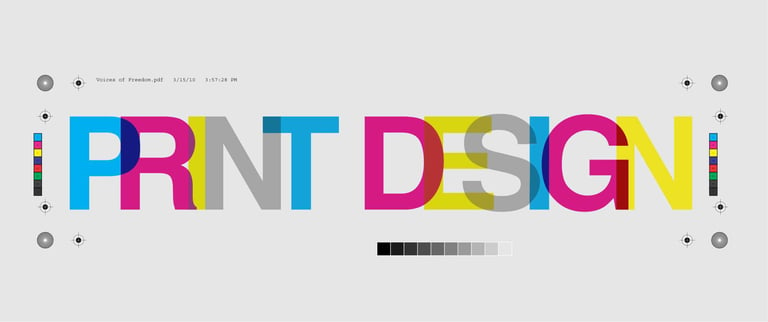
Print design is a specialized field within graphic design that focuses on creating visual materials for physical, printed media. This can encompass a wide range of materials, from business cards and brochures to posters, magazines, and packaging. The goal of print design is to produce visually appealing and informative materials that effectively convey a message or promote a brand or product in the physical world. Print designers use graphic design software, typography, color theory, and layout techniques to create eye-catching and functional printed materials.
Print design is a blend of art and communication, where these highlights come together to produce printed materials that are not only visually attractive but also functional in conveying information and messages to the audience. The highlights of print design encompass the key elements and considerations involved in creating visually appealing and effective printed materials.
Here are some of the primary highlights of print design:
Typography: Choosing and arranging fonts to ensure readability and convey the right tone and message.
Layout and Composition: Creating a well-structured and visually balanced design that guides the reader's eye and enhances content presentation.
Color Theory: Selecting and using colors strategically to evoke emotions, maintain brand consistency, and create a harmonious visual experience.
Imagery and Graphics: Incorporating relevant and high-quality images, illustrations, and graphics that complement the content and engage the audience.
Print Medium: Understanding the specific requirements and constraints of the chosen print medium, whether it's a brochure, poster, book, or packaging.
Resolution and Image Quality: Ensuring images are high-resolution and suitable for the intended print size to avoid pixelation or blurriness.
Branding Consistency: Maintaining consistent branding elements, including logos, color schemes, and visual identity, across all printed materials.
Paper Selection: Choosing the appropriate type of paper, finish, and weight to suit the project's purpose and target audience.
Print Production Knowledge: Understanding the printing process, including file formats, bleeds, trim marks, and color profiles, to ensure the design translates accurately from screen to print.
Printing Techniques
Modern printing techniques have evolved significantly with advancements in technology. Here are some of the contemporary printing methods used in various industries:
Digital Printing: This includes technologies like laser and inkjet printing. It's widely used for producing short-run, personalized materials such as brochures, business cards, and variable data documents.
Offset Printing: Offset lithography remains a popular choice for high-volume print runs, offering consistent and high-quality results. It involves the transfer of ink from a plate to a rubber blanket and then to the printing surface.
Flexographic Printing: Commonly used for packaging materials, labels, and newspapers. It employs flexible relief plates and is known for its speed and cost-effectiveness.
Screen Printing: Ideal for printing on textiles, apparel, signage, and promotional products. It involves pressing ink through a stencil onto the printing surface.
Gravure Printing: Often used for high-quality, long-run printing, such as magazines, catalogs, and packaging. It uses engraved cylinders to transfer ink to the substrate.
3D Printing: Also known as additive manufacturing, 3D printing creates three-dimensional objects by layering material (such as plastic, metal, or resin) based on a digital model. It's widely used in prototyping, manufacturing, and healthcare.
Dye-Sublimation Printing: Common for producing high-quality, full-color images on materials like ceramics, textiles, and metal. The process involves transferring dye into the material using heat.
UV Printing: UV-curable ink is used in this method, which is then cured with UV light. It's suitable for various surfaces, including glass, plastic, and wood. It produces vibrant and durable prints.
Large Format Printing: Employed for creating large graphics, banners, posters, and signs. It often utilizes inkjet technology and can produce prints of considerable size.
Nanography: A relatively new technology that uses tiny ink droplets to create high-resolution, high-speed prints with a broad range of applications, including commercial printing and packaging.
Litho, short for "lithography," is a printing process that is commonly used for producing high-quality, large volume printed materials. It's a versatile and cost-effective printing technique that has been widely employed for various applications, such as posters, packaging, books, magazines, and more.
Lithography process entail:
a. Plate Preparation: In lithography, a flat surface, traditionally made of metal or stone, is used as the printing plate. This surface is coated with a photosensitive emulsion.
b. Image Exposure: The plate is exposed to light through a photographic negative or a digital file. This exposure hardens the emulsion in areas where the image is to be printed.
c. Chemical Treatment: The plate is then treated with chemicals to develop the image. This process makes the image areas ink-receptive and the non-image areas ink-repellent.
d. Ink Application: An ink roller is used to apply ink to the plate. The ink adheres only to the image areas due to the chemical treatment.
e. Transfer to Substrate: The inked plate is pressed against the printing surface (typically paper), transferring the image onto the substrate.
Experience You Can Rely On
Despite the rise of digital media and artificial intelligence, print design continues to play a vital role in business communication. Whether through direct mail campaigns, brochures, annual reports, product literature, packaging, signage, or marketing collateral, professionally designed print materials remain powerful tools for building brands, engaging customers, and driving sales.
As a graphic designer with more than twenty years of experience in print design, publishing, branding, and visual communication, I bring more than technical design skills to every project. I understand the bigger picture—how design, messaging, audience behavior, and brand identity work together to create meaningful results. My goal is not simply to make things look attractive, but to develop strategic visual solutions that communicate clearly, strengthen your brand, and connect with your audience.
In today's AI-driven marketing environment, I combine traditional design principles with modern tools, analytics, and digital marketing insights to help clients maximize the effectiveness of their print and promotional materials. The result is design that is both visually compelling and purpose-driven.
Whether you are launching a new business, refreshing your brand, publishing a book, promoting an event, or creating marketing materials, I will work closely with you to develop a design strategy that reflects your vision and achieves your objectives.
Put me to the test
Tell me about your project, and I will show you how thoughtful, professional design can help bring your ideas to life. Contact me today, and I will prepare a customized proposal tailored to your next print, publishing, or branding project.
The Art and Practice of Print Design
F E B R U A R Y 2 0 2 5
